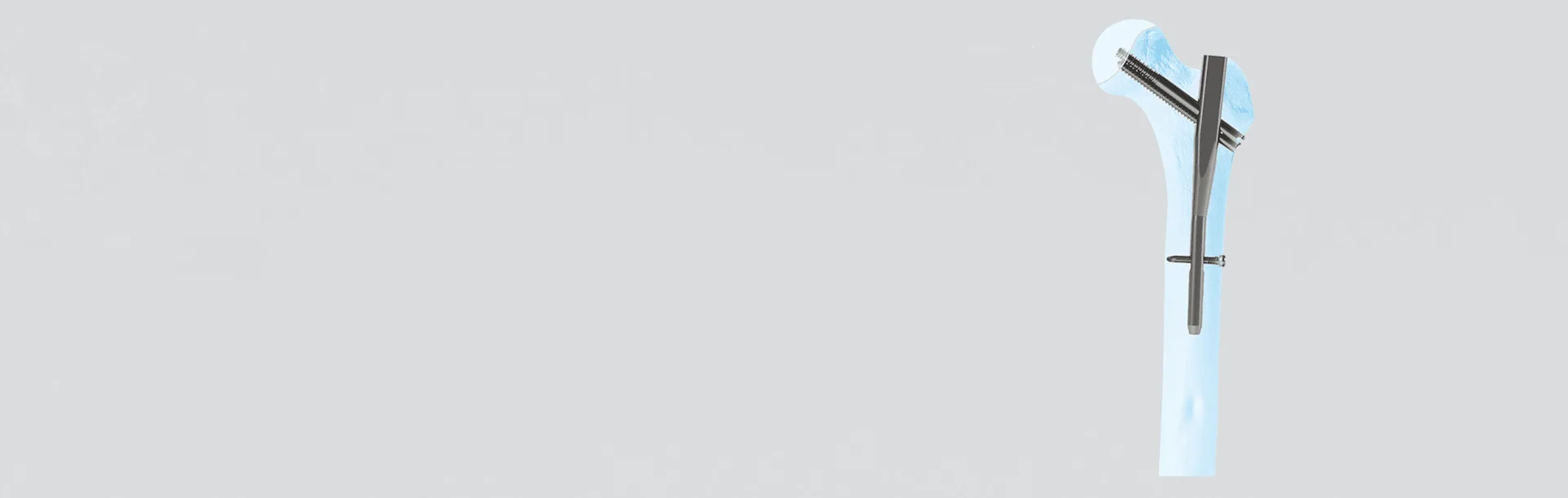
INTEGRATED INTERTROCHANTERIC NAIL
Integrated Intertrochanteric Nail adopts dual-screw structure for antirotation, compression and biomechanical stability, indicated for intertrochanteric and subtrochanteric femoral fractures.
Key Features
Integrated dual-screw technology combining a lag screw and compression screw for enhanced rotational stability
Active compression mechanism that maintains compression across the fracture site after implantation
Anti-rotation design reducing femoral head rotation and implant migration
Trapezoidal proximal nail geometry for improved metaphyseal press-fit and biomechanical support
Anatomically contoured nail design to match proximal femoral anatomy and facilitate insertion
Minimally invasive surgical technique reducing soft tissue trauma and operative blood loss
Titanium alloy construction offering high fatigue strength, corrosion resistance, and biocompatibility
Distal locking options for static or dynamic fixation based on fracture characteristics
Indications
Intertrochanteric femoral fractures
Unstable trochanteric fractures
Subtrochanteric fractures
Basilar neck fractures
Osteoporotic proximal femur fractures
Pathological fractures and complex proximal femoral fracture patterns
Clinical Advantages
Enhanced rotational and angular stability compared with conventional single-screw systems
Reduced risk of cut-out, implant failure, and fracture collapse
Improved fracture compression and union potential
Allows early weight-bearing and rehabilitation
Particularly effective in unstable and osteoporotic fractures
Eliminates the "Z-effect" commonly associated with some dual-screw fixation systems
Options
Multiple nail diameters and lengths
Left and right anatomical designs
Compatible integrated compression and lag screw systems for different patient anatomies