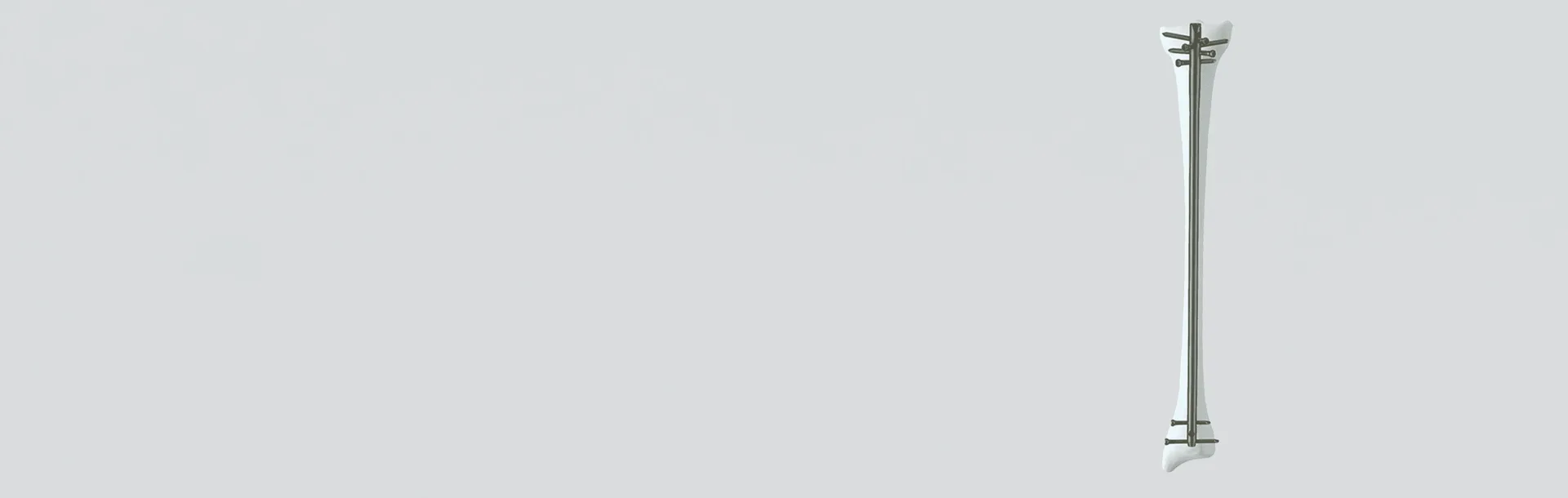
TIBIAL LOCKING NAIL
Tibial locking nail is indicated for stable and unstable tibial fractures (proximal to distal), featuring anatomical geometry and multi-planar locking technology for superior biomechanical stability.
Key Features
Multi-planar locking options for enhanced rotational and angular stability
Anatomically contoured nail design to optimize fit within the tibial canal
Proximal and distal locking configurations enabling fixation of complex metaphyseal fractures
Semi-extended nailing capability to improve alignment and reduce malreduction risk in proximal tibial fractures
Low-profile and headless screw options designed to minimize soft tissue irritation
Cannulated nail design allowing accurate guide-wire assisted insertion
Titanium alloy construction providing high strength, fatigue resistance, and biocompatibility
Minimally invasive instrumentation system supporting efficient surgical workflow and reduced soft tissue disruption
Indications
Tibial shaft fractures
Proximal tibial fractures
Distal tibial fractures
Segmental and comminuted tibial fractures
Open and closed tibial fractures
Nonunions and malunions
Pathological fractures and osteoporotic bone fixation cases
Clinical Advantages
Provides strong intramedullary load-sharing fixation
Helps maintain alignment in challenging proximal tibial fractures
Supports early mobilization and weight-bearing
Minimizes soft tissue damage through minimally invasive techniques
Reduces risk of malalignment with semi-extended surgical approach
Enhanced distal and proximal fixation improves stability in complex fractures
Streamlined instrumentation improves surgical efficiency
Options
Multiple nail diameters and lengths
Static and dynamic locking configurations
Compatible proximal and distal locking screws, lag screws, and targeting systems