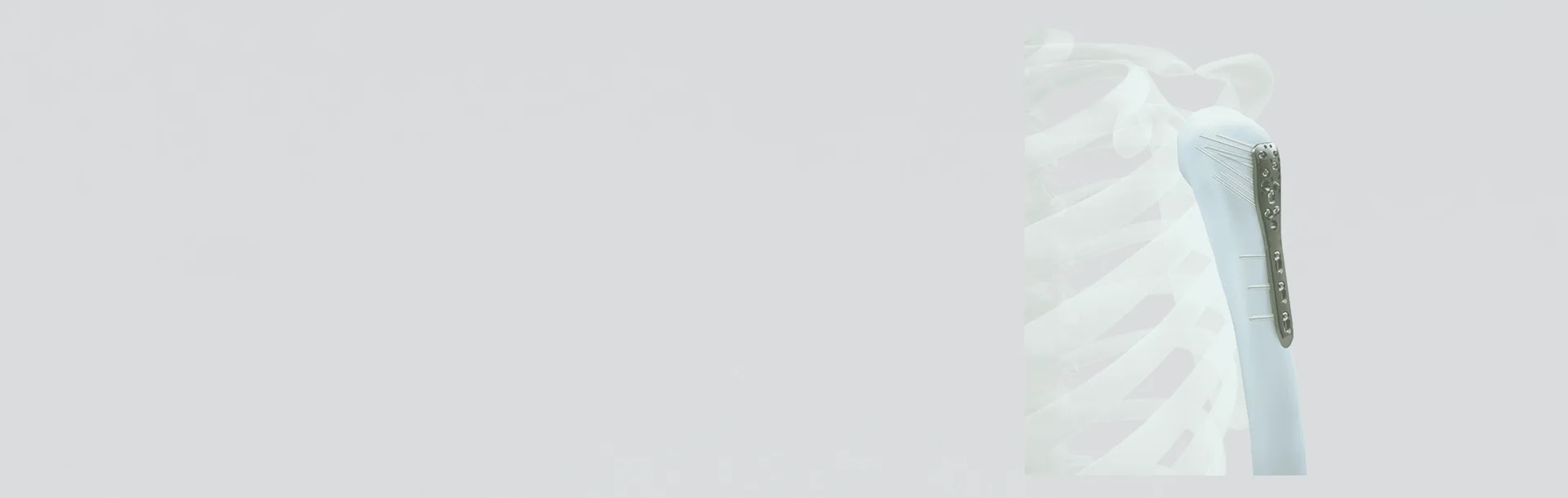
PROXIMAL HUMERUS LCP
Proximal humeral locking plate is indicated for proximal humerus fractures, with region-specific anatomical contouring to provide stable fixation for humeral head, tuberosities and metaphysis.
Key Features
Locking Compression Plate (LCP) system providing angular stable fixation in osteoporotic and comminuted bone
Anatomically pre-contoured design tailored to the proximal humerus for improved fit and reduced intraoperative bending
Titanium (TiCP) construction offering high strength, corrosion resistance, and excellent biocompatibility
Screw angulation options enabling fixation of humeral head fragments and tuberosities
Suture holes/eyelets (in many systems) for rotator cuff and tuberosity augmentation
Low-profile plate design to minimize subacromial impingement and soft tissue irritation
Combination locking and compression screw holes for flexible fixation strategies
Indications
Proximal humerus fractures (2-part, 3-part, and 4-part fractures)
Fracture-dislocations of the shoulder
Comminuted metaphyseal and humeral head fractures
Osteoporotic proximal humerus fractures
Nonunion or malunion of proximal humerus fractures
Periprosthetic fractures around the proximal humerus (selected cases)
Clinical Advantages
Provides stable fixation in osteoporotic and comminuted proximal humerus fractures
Restores anatomical alignment of humeral head and tuberosities
Allows early passive and active shoulder mobilization when stable fixation is achieved
Reduces risk of screw pullout through locking screw technology
Supports rotator cuff and tuberosity reconstruction using suture fixation options
Titanium design improves biocompatibility and reduces soft tissue irritation
Options
Left and right anatomical plate versions
Multiple plate lengths for different fracture patterns
Locking and cortical screw compatibility
Variable angle screw options for head fragment fixation
Optional suture holes for rotator cuff/tuberosity augmentation