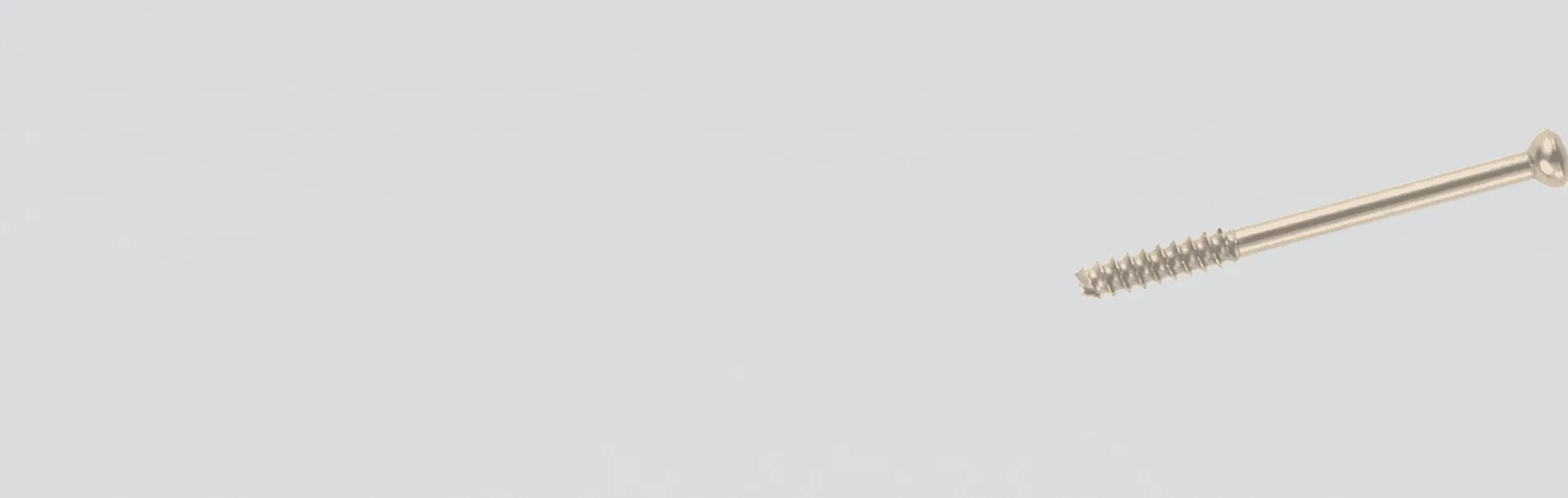
COMPRESSION CANNULATED SCREW
Compression cannulated screw is indicated for stable internal fixation of small bone fractures and osteotomies, providing controlled interfragmentary compression with cannulated design for guide-wire assisted minimally invasive insertion.
Key Features
Cannulated design enabling accurate guide-wire assisted insertion and minimally invasive technique
Threaded compression mechanism that generates interfragmentary compression for enhanced stability
Partially or fully threaded options depending on fracture type and fixation requirement
Self-tapping tip design to facilitate easier insertion and reduce operative steps
Variable screw diameters and lengths to accommodate different anatomical locations
Countersunk head design to minimize soft tissue irritation and hardware prominence
Biocompatible materials (commonly titanium or stainless steel) for strength and corrosion resistance
Indications
Compression cannulated screws are commonly used for:
Intra-articular fractures requiring precise reduction
Femoral neck fractures
Malleolar fractures (ankle)
Scaphoid fractures
Metatarsal and phalangeal fractures
Osteotomies requiring stable compression fixation
Small bone fragment fixation in trauma and reconstructive surgery
Clinical Advantages
Provides strong interfragmentary compression for primary bone healing
Enables minimally invasive percutaneous fixation, reducing soft tissue damage
Improves fracture stability and alignment maintenance
Reduces risk of implant loosening with proper technique
Versatile use across multiple anatomical regions and fracture types
Supports early mobilization depending on fracture stability
Options
Partially threaded compression screws
Fully threaded positional screws
Multiple diameters (commonly 3.0 mm to 7.3 mm range depending on system)
Variable lengths for different anatomical requirements
Different thread pitch designs for optimized compression performance