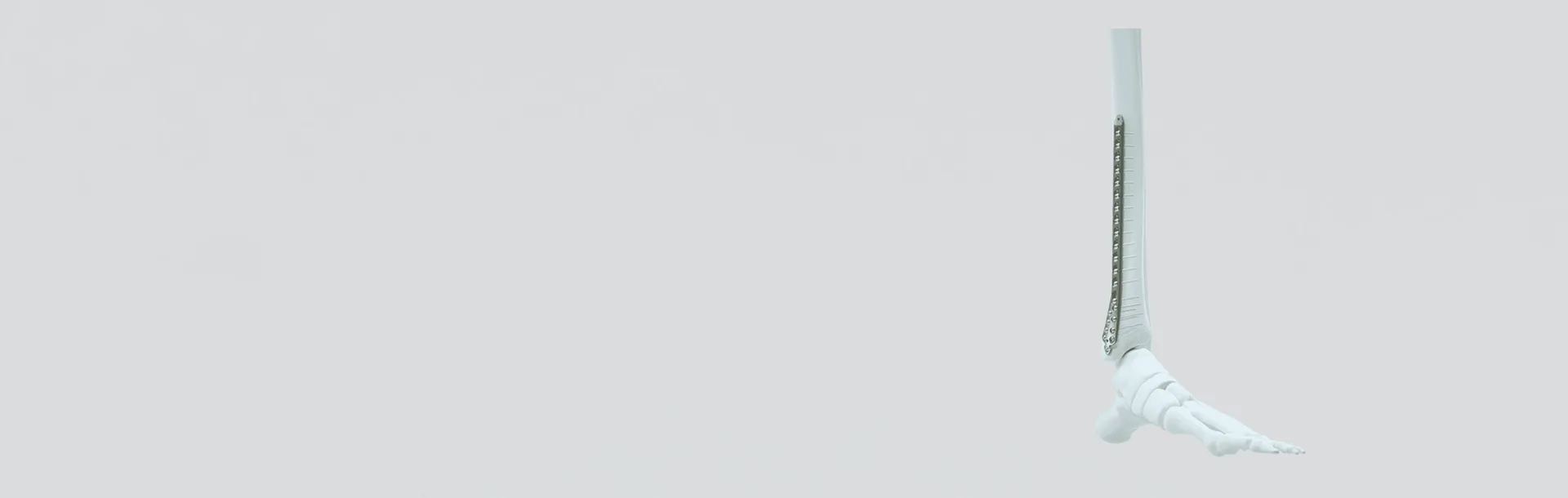
DISTAL MEDIAL TIBIA LCP TICP
Medial distal tibial locking plate with tab is indicated for distal tibia fractures involving medial column, with extended tab design to enhance plate positioning, fixation stability and soft tissue adaptability.
Key Features
Locking Compression Plate (LCP) technology providing angular stable fixation for complex fracture patterns
Anatomically contoured distal medial tibia design optimized for the medial distal tibial surface
Extended tab (W/TAB) configuration to assist with accurate plate placement and improved fixation control
Titanium (TiCP) construction offering high strength, fatigue resistance, and excellent biocompatibility
Multi-screw distal cluster design for subchondral support of the tibial plafond
Combination locking and compression holes allowing flexible fixation strategies
Extended shaft design for bridging metaphyseal and diaphyseal fracture zones
Low-profile plate design to minimize soft tissue irritation along the medial ankle region
Indications
The Distal Medial Tibia LCP (W/TAB) – TiCP is indicated for:
Medial distal tibial fractures (extra-articular and intra-articular)
Pilon fractures with medial column involvement
Comminuted distal tibial metaphyseal fractures
Osteoporotic distal tibial fractures
Fractures requiring medial buttress support
Post-traumatic malunion or corrective osteotomy of the distal tibia
Clinical Advantages
Provides strong medial column buttress support for distal tibial stability
Enhances accuracy of plate positioning through tab-assisted fixation
Restores ankle joint alignment and tibial plafond congruity
Improves fixation stability in comminuted and osteoporotic bone
Supports early ankle mobilization when rigid fixation is achieved
Titanium design reduces soft tissue irritation and improves biocompatibility
Options
Left and right anatomical plate versions
Multiple plate lengths for different fracture patterns
Locking and cortical screw compatibility
Tab-enhanced design for improved intraoperative handling
Pre-contoured medial distal tibial geometry for improved surgical fit